
By: William Seawell, Induron Director of Technical Services
Why are moisture-cured urethane (MCU) zinc primers so well thought of and so heavily used in the water tank painting industry?
- They dry quickly
- They can be recoated long after initial application
- They are easy to apply
- They have a long track record of protecting water tanks in both atmospheric service and immersion
- They are specified as part of AWWA D102 systems
Those are all strong reasons. If you talk to a water tank painter or fabricator, they will likely cite one—or all of them.
The Economic Reality Behind Coating Decisions
Beyond performance, economics play a major role. Water tank building and water tank painting provide valuable services to the community, but it’s not charity work. They are still businesses driven by profitability. The most primary impediments to this profit with respect to the paint portion of the tank are as follows:
Field Application Challenges
Labor is expensive in the field. Most job costs are tied to labor, access, and equipment—not the coating itself. Paint materials rarely exceed 30% of total job cost and are often significantly less. A coating that cuts recoat time in half can justify even triple the material cost. That’s how valuable labor savings are.
Shop Production Bottlenecks
In shop environments, access and mobilization are less of a concern—but opportunity cost is critical. A coating that dries slowly—even if free—can reduce throughput. The bottleneck in production is often drying time in the bay. Speed is everything.
The Cost of Failure
Failures are expensive. Rework not only adds cost but also damages reputation in ways that extend beyond the balance sheet.
Why MCU Zinc Primers Meet These Demands
Moisture-cured urethane zinc primers, such as Indurazinc MC67, are designed to address these exact challenges. They perform exceptionally well across the board.
But there’s one more advantage that often goes underappreciated outside of coatings science:
Cold Weather Performance
MCU zincs can cure down to 0°F. This is a major advantage. Most epoxy coatings stop curing below approximately 40°F, which creates serious limitations across much of North America’s geography North of Houston, Los Angeles and Tampa, for 8-10 months of the year.
A Shift in Perspective
At this point, it may sound like a strong endorsement of MCU zinc primers though that wasn’t the original intent…
My intent is to get you, the reader, to agree with my premises that these are the properties we’d want in a water tank primer before showing you that you can have all of that at half the material cost, without the undefined, unquantified, unknown-unknown heavy metal liabilities inherent to zinc and without the isocyanates.
An Established Alternative: Ceramaprime
This technology already exists.
For years, Induron has offered Ceramaprime, which delivers many of the same benefits:
- Fast drying
- Long recoat window
- Ease of application
- Proven epoxy performance in atmospheric and immersion service
- Specified as part of AWWA D102 systems
- Lower cost than zinc on both a per-gallon and applied film basis
Closing the Gap: Introducing Ceramaprime CC
There were still reasons contractors and tank builders stayed with zinc—primarily speed and low-temperature curing. That feedback led us to innovation.
Ceramaprime CC (Cold Cure) was developed to address those exact concerns.
- Cures down to 20°F
- Dry-to-handle in 2 hours at 75°F
- Competitive with the fastest zinc primers


A Better Approach for 2026
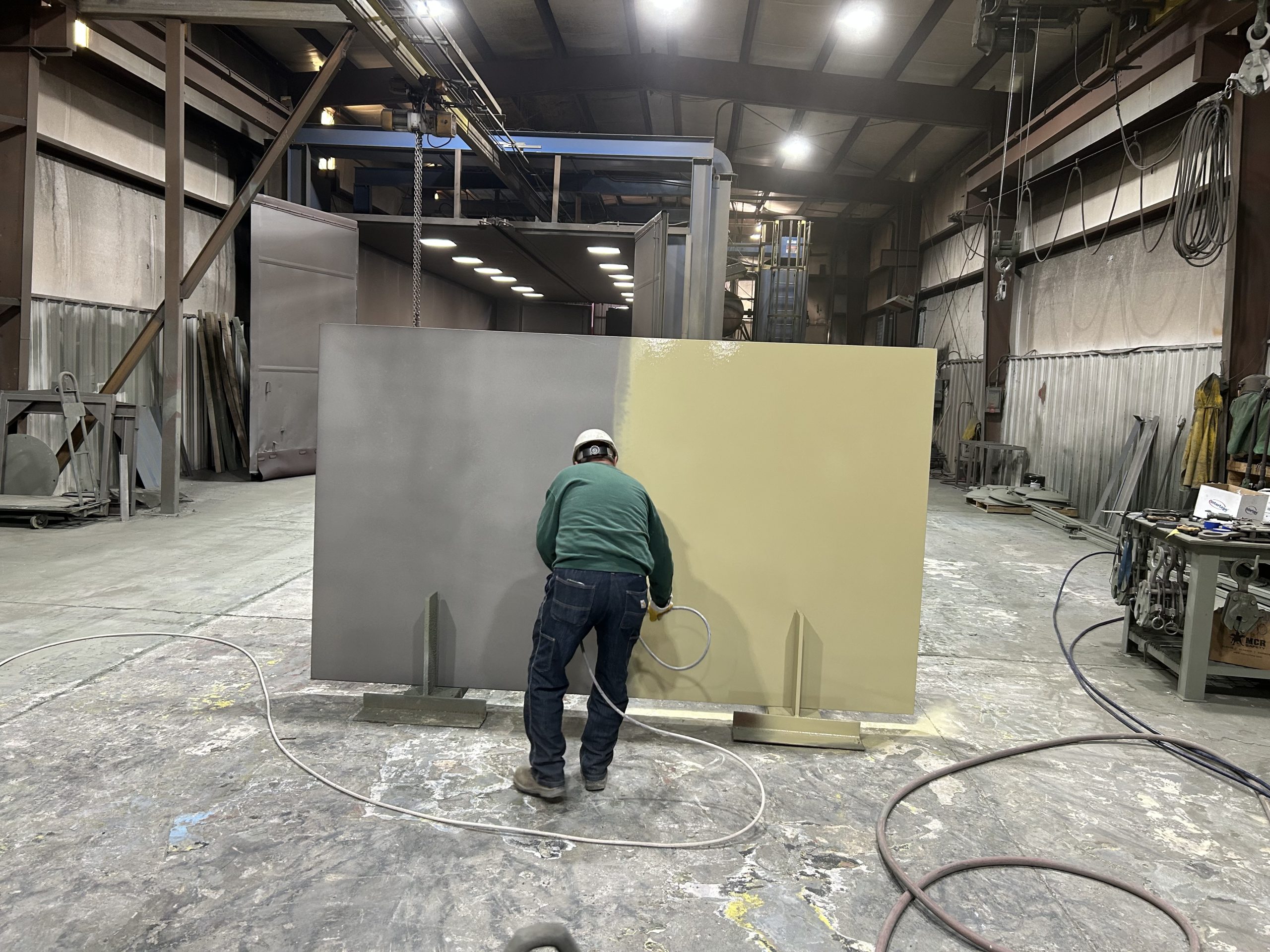
Let us come to your shop and show you:
- Where money is being lost
- How workers may be unnecessarily exposed to isocyanates
- How application challenges can be reduced
- Why you may be paying a premium for outdated solutions
None of that is necessary in 2026. It’s not 1998 anymore.
See It for Yourself
Let us demonstrate Ceramaprime CC in your operation. We’re confident that a hands-on application will show its value immediately and change the way you think about tank priming.